How to Read Harmonised Cable Designations
An introduction to the letters and numbers in designations such as H03VV-F, H05VV-F and H07V-U, with practical examples.
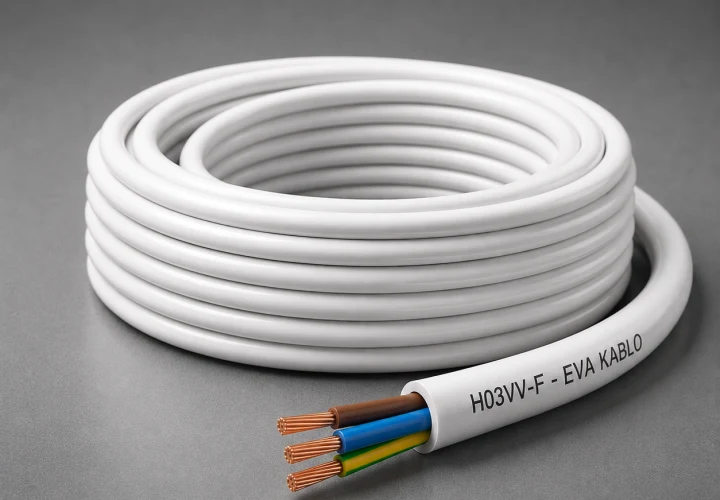
A harmonised cable designation communicates the product’s basic construction in a compact, standardised form. Reading it correctly provides an initial indication of voltage class, insulation and sheath materials, and conductor construction. The designation does not, however, replace the complete technical data sheet or suitability assessment.
Main parts of the designation
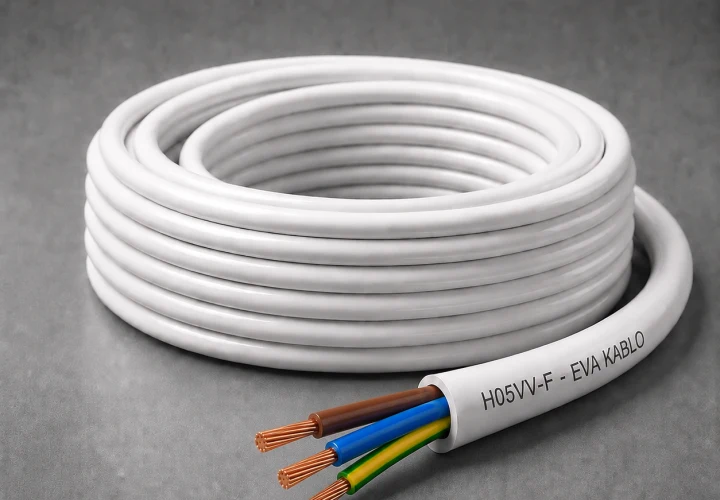
The initial H identifies a harmonised type. Numbers such as 03, 05 and 07 indicate voltage classes: for example, 03 corresponds to 300/300 V, 05 to 300/500 V and 07 to 450/750 V. The letter V identifies PVC in the relevant insulation or sheath layer.
Conductor and form indicators
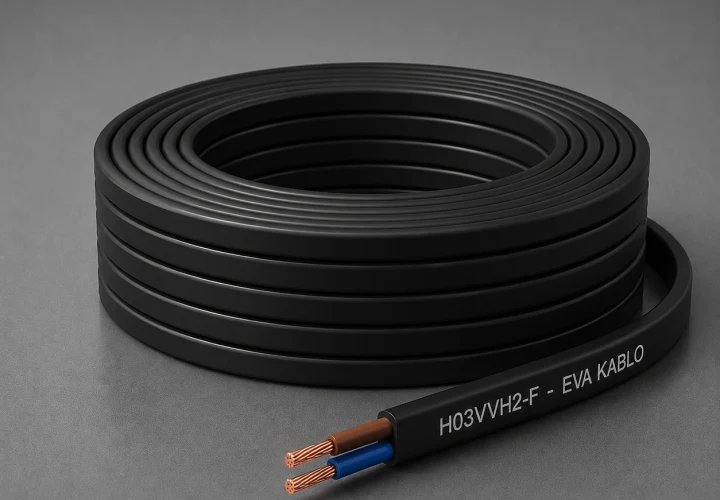
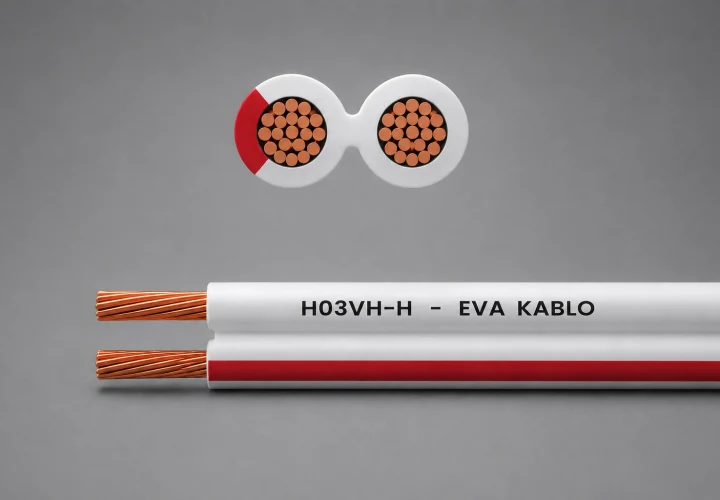
Characters in the final part distinguish conductor construction or cable form according to the product family. For example, U identifies a solid conductor, R a stranded conductor and K a fine-stranded conductor, while F identifies flexible cable construction. Additional characters may identify flat or separable forms.
H05VV-F therefore describes a 300/500 V flexible cable with PVC insulation and PVC sheath. H07V-U describes a 450/750 V PVC-insulated wire with a solid conductor. Orders should include the full designation, number of cores, cross-section and the applicable G/X core notation.