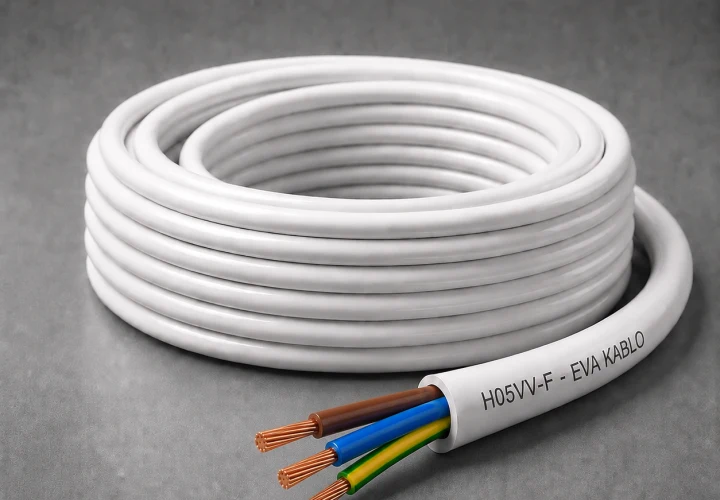
How Is Cable Cross-Section Selected? A Practical Guide
Why load current, installation method, ambient temperature, voltage drop and protective-device coordination must be assessed together.
Cable cross-section is not selected from appliance power or nominal current alone. The conductor must remain within its permissible operating temperature, provide acceptable voltage drop and coordinate with the protective device. A single generic online table is therefore not a final design source for every project.
Main variables affecting selection
Continuous or intermittent loading, cable length, number of loaded conductors, routing in conduit or free air, grouping with other circuits and ambient temperature all influence current-carrying conditions. The conductor class and size accepted by the connection terminals must also be checked.
A practical review sequence
- Determine load current and duty.
- Select a cable type suitable for system voltage and application.
- Apply installation, ambient-temperature and grouping factors.
- Check voltage drop and short-circuit withstand.
- Verify coordination with the fuse or circuit breaker.
Current rating is directly related to how heat is transferred through the cable and its surroundings. Final sizing must be performed by a competent electrical professional using current regulations, the project standard and manufacturer technical data.